![[DEV] Marine Renewables Canada](https://mrc-test-import.siteprev.dev/wp-content/uploads/2026/07/mrc-logo.svg)
 Recent findings from MRC’s commissioned Atlantic Wind Energy Supply Chain Assessment demonstrate the scale of the opportunity. The study found that approximately 28 per cent of Atlantic Canadian firms already possess highly relevant capabilities for offshore wind development, rising to more than 60 per cent when including companies with partially transferable experience. The assessment also highlighted the long-term employment potential associated with offshore wind, with modelling for 11.5 GW of development indicating demand for more than 2,000 ongoing operations and maintenance jobs for technicians and maritime trades.
For tidal energy, the most significant potential is concentrated in Nova Scotia’s Bay of Fundy – recognized globally for having the highest tides in the world. Estimates suggest the Minas Passage alone contains approximately 7,000 MW of tidal energy potential, with roughly 2,500 MW considered technically and economically viable for development. Canada’s tidal energy initiatives have already engaged more than 500 suppliers and are expected to continue generating significant supply chain opportunities for companies across Atlantic Canada.
Recent findings from MRC’s commissioned Atlantic Wind Energy Supply Chain Assessment demonstrate the scale of the opportunity. The study found that approximately 28 per cent of Atlantic Canadian firms already possess highly relevant capabilities for offshore wind development, rising to more than 60 per cent when including companies with partially transferable experience. The assessment also highlighted the long-term employment potential associated with offshore wind, with modelling for 11.5 GW of development indicating demand for more than 2,000 ongoing operations and maintenance jobs for technicians and maritime trades.
For tidal energy, the most significant potential is concentrated in Nova Scotia’s Bay of Fundy – recognized globally for having the highest tides in the world. Estimates suggest the Minas Passage alone contains approximately 7,000 MW of tidal energy potential, with roughly 2,500 MW considered technically and economically viable for development. Canada’s tidal energy initiatives have already engaged more than 500 suppliers and are expected to continue generating significant supply chain opportunities for companies across Atlantic Canada.
 At the same time, Summit discussions reinforced the importance of continued collaboration to address key gaps identified in the supply chain assessment, including workforce development and training, supplier readiness and education, infrastructure planning, and stronger partnerships between developers and regional companies. Participants also emphasized the importance of ensuring Indigenous businesses and underrepresented groups are positioned to participate in the growing marine renewable energy supply chain.
“We are seeing significant momentum for marine renewable energy development in Atlantic Canada,” said Elisa Obermann, Executive Director of Marine Renewables Canada. “The Spring Summit highlighted the near-term opportunities ahead and laid out practical advice and intelligence that can help ensure local businesses and communities are putting their capabilities, expertise, and partnerships to work. The focus now must be on continuing to strengthen our workforce, supply chains, and industry collaboration so Atlantic Canadians are fully positioned to benefit from this growing global sector.”
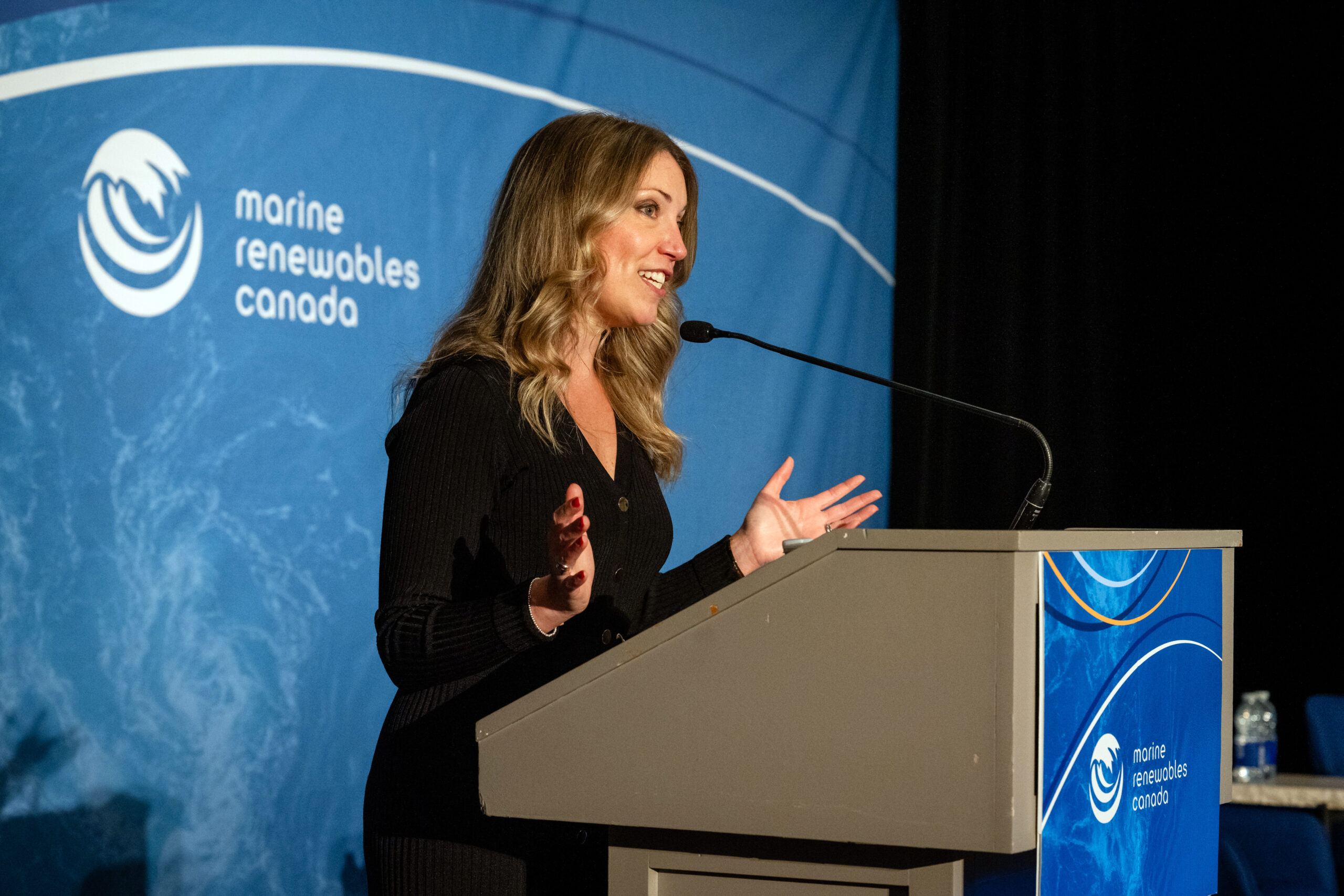 Elisa Obermann, Executive Director, Marine Renewables Canada
MRC extends its sincere thanks to the Government of Nova Scotia, Presenting Partner of the Spring Summit, as well as Event Sponsors – Angler Solutions, Ocean Sonics, Orbital Marine Power and Eauclaire Tidal, Seaforth Geosurveys, and Ventolines. MRC also thanks its members, speakers, and industry participants for their unwavering support and collaboration during this important period of growth for the sector.
Elisa Obermann, Executive Director, Marine Renewables Canada
MRC extends its sincere thanks to the Government of Nova Scotia, Presenting Partner of the Spring Summit, as well as Event Sponsors – Angler Solutions, Ocean Sonics, Orbital Marine Power and Eauclaire Tidal, Seaforth Geosurveys, and Ventolines. MRC also thanks its members, speakers, and industry participants for their unwavering support and collaboration during this important period of growth for the sector.
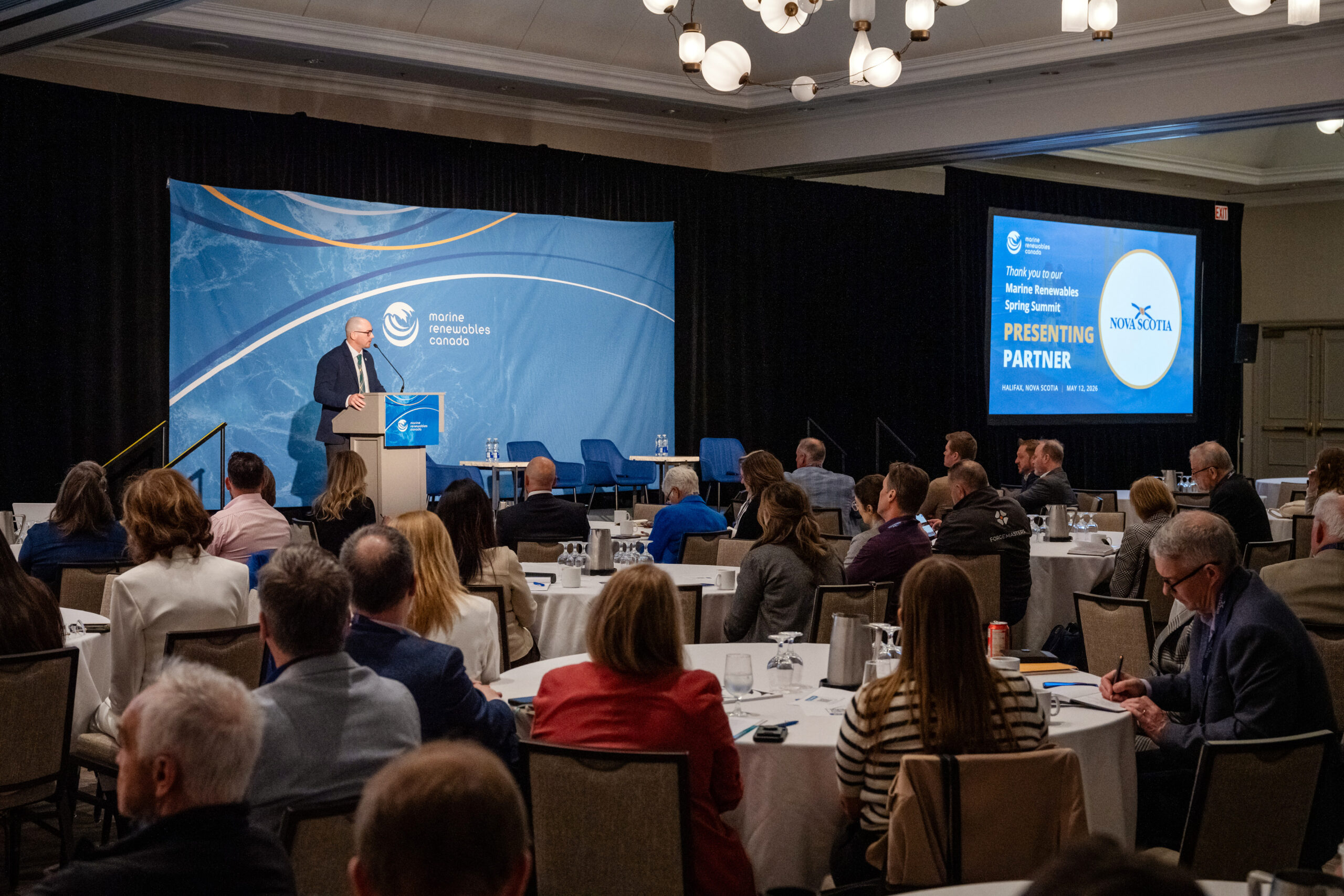 Marco MacLeod, Ministerial Assistant to the Minister of Energy, Government of Nova Scotia
More Information
Marco MacLeod, Ministerial Assistant to the Minister of Energy, Government of Nova Scotia
More Information
- Marine Renewable Energy Sector Vision 2050: An Integral Part of Canada’s Clean Energy Future
- Join MRC’s growing membership and Working Groups